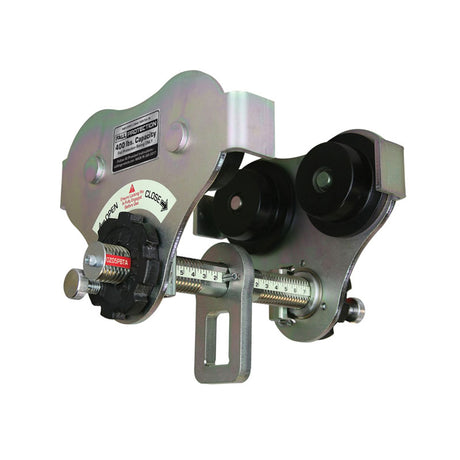
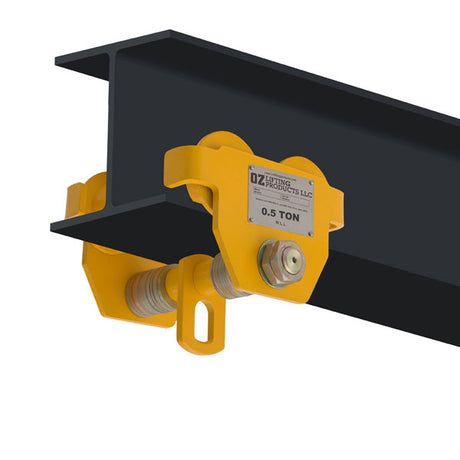
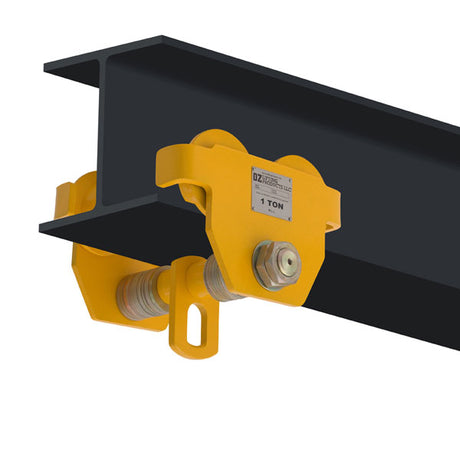
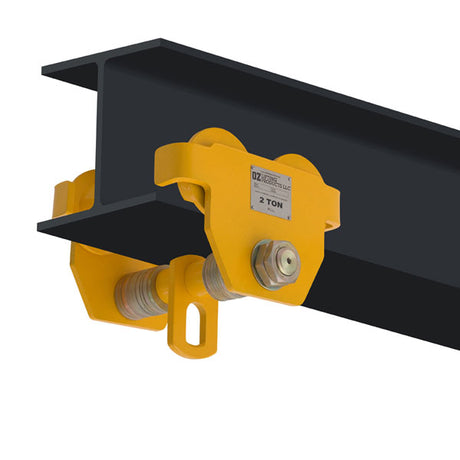
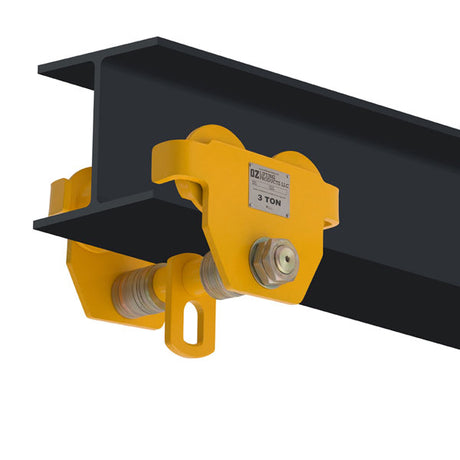
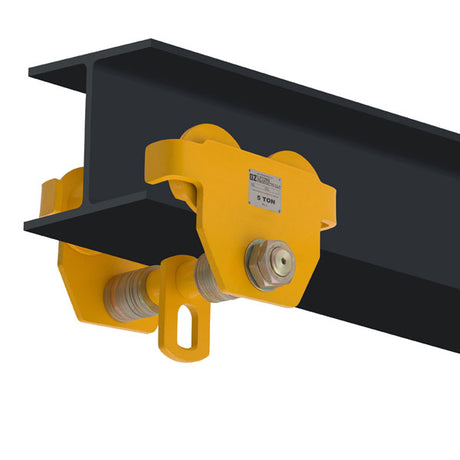
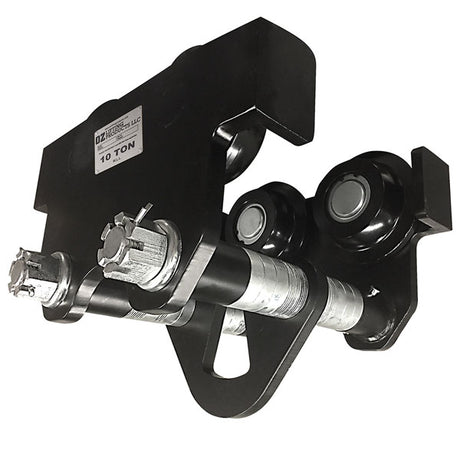
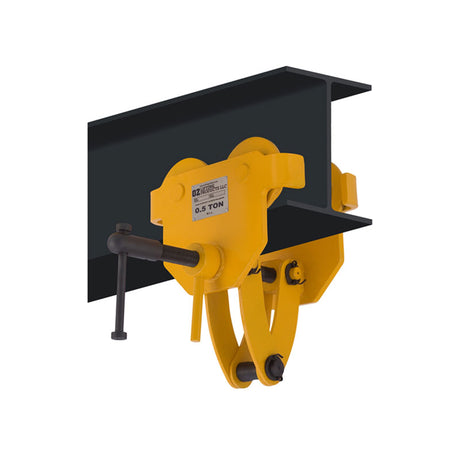
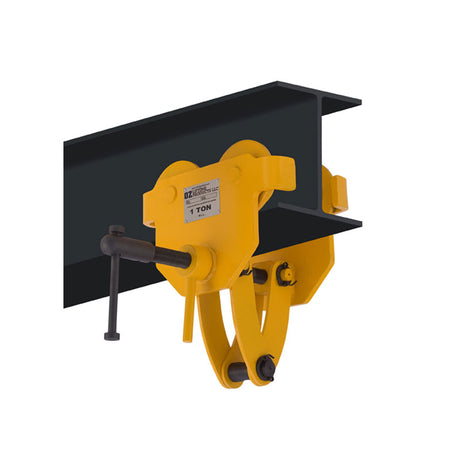
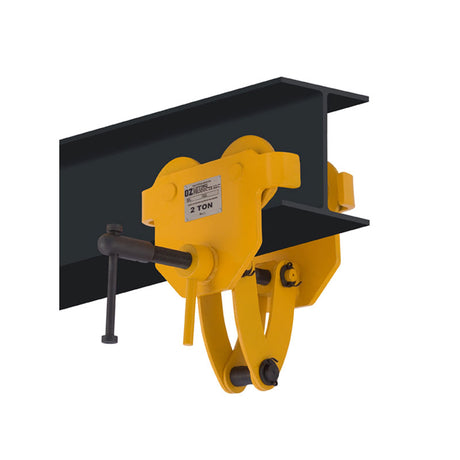
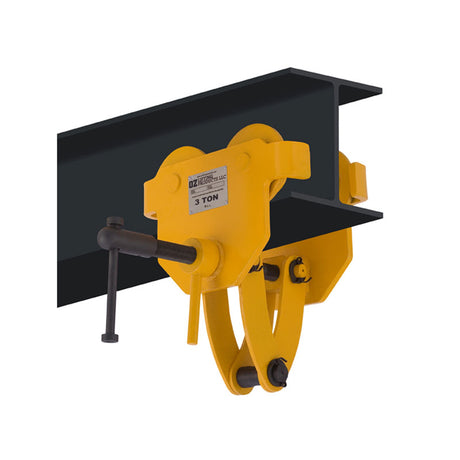
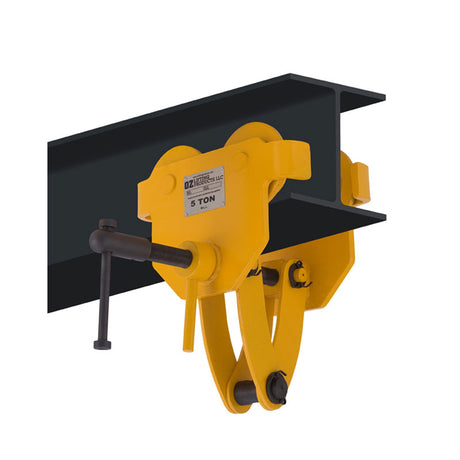
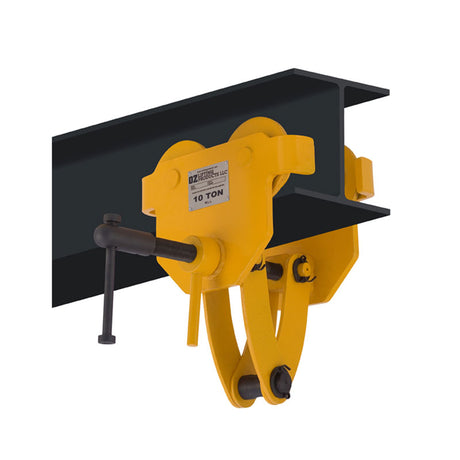
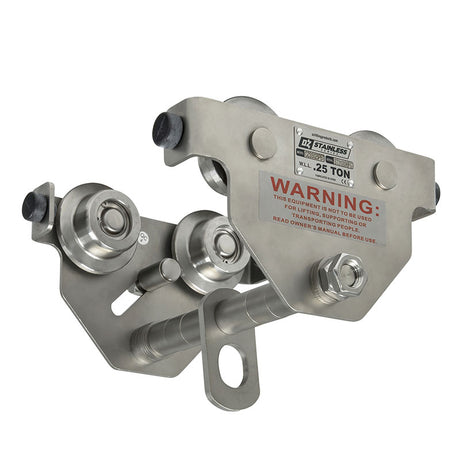
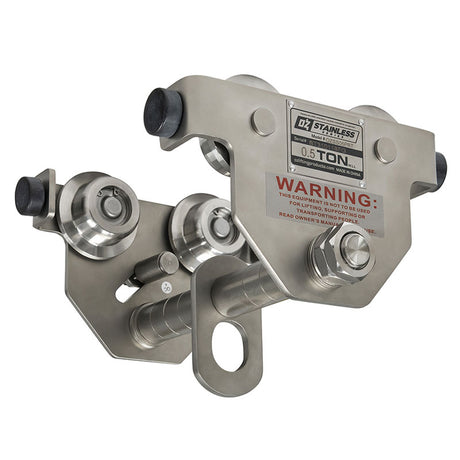
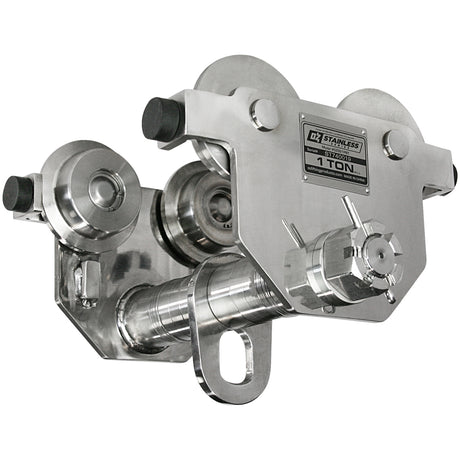
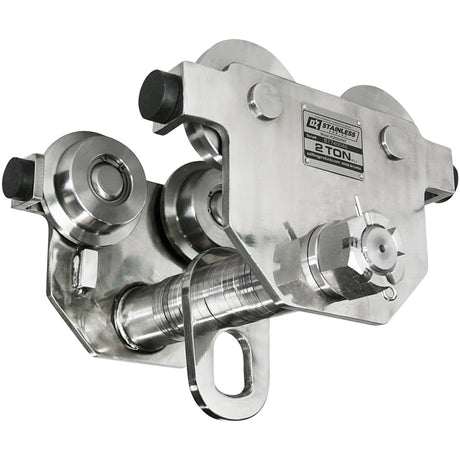
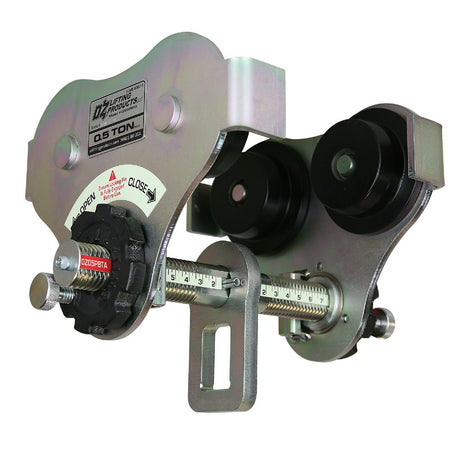
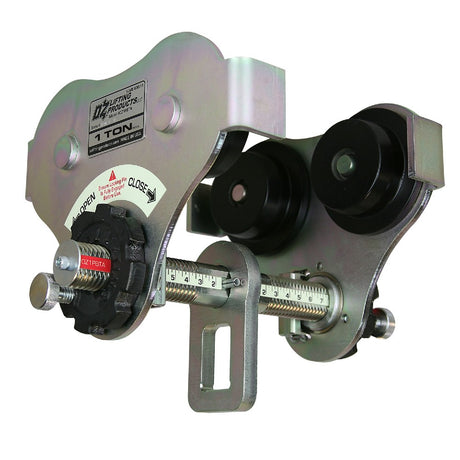
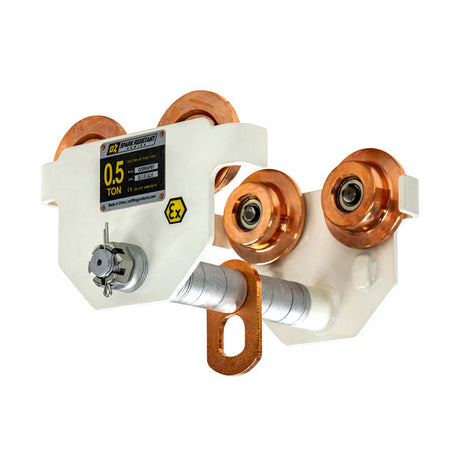
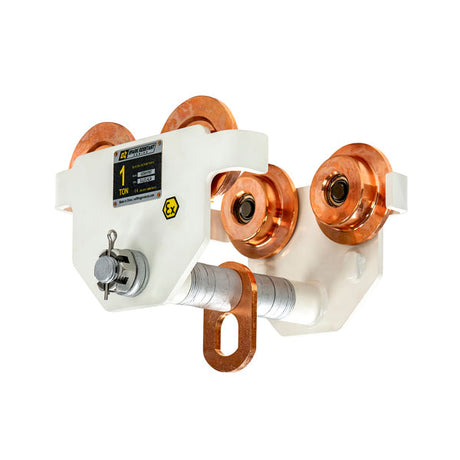
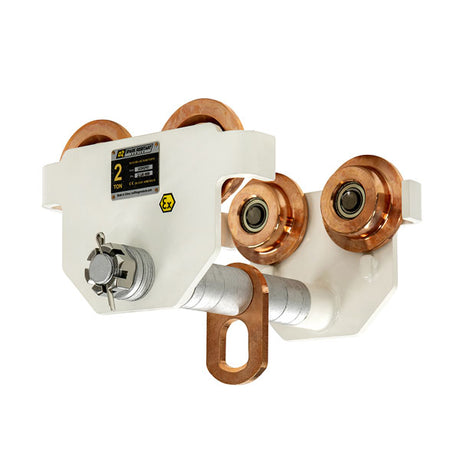
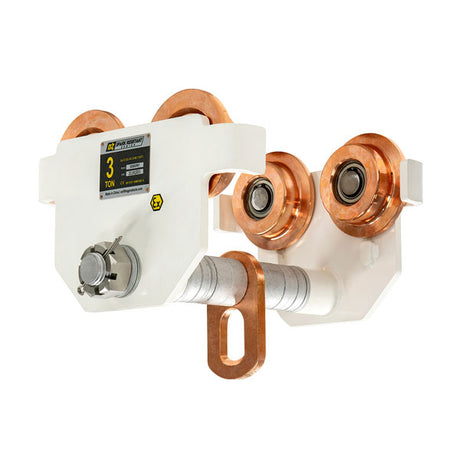
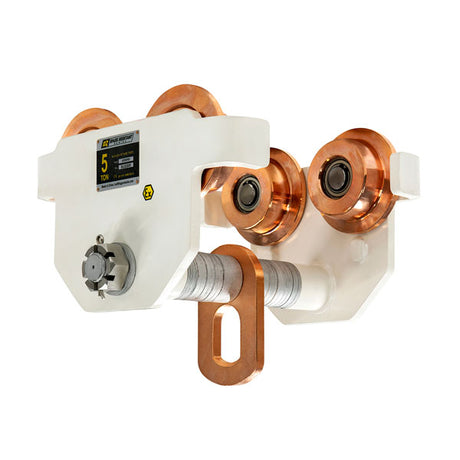
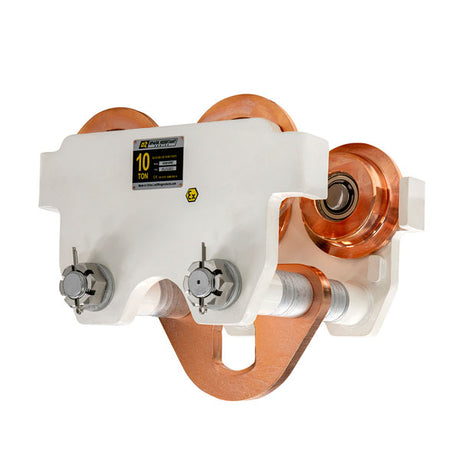
Manual horizontal load movement remains a core requirement across U.S. manufacturing, fabrication, maintenance, and assembly environments, and Push Trolleys continue to be one of the most dependable solutions available. A push trolley, commonly referred to as a push beam trolley, is designed to suspend a hoist beneath a structural beam and allow controlled horizontal travel by hand. Within the wider Beam Clamps & Beam Trolleys category, these trolleys are valued for their simplicity, reliability, and mechanical precision. A correctly specified beam trolley runs along the lower flange of an I beam or H beam using a matched wheel set, enabling operators to position loads accurately without powered travel. This makes push trolleys especially effective where lift paths are short, movements are frequent, and fine positioning is required. By removing motors, wiring, and controls, a push beam trolley reduces failure points while maintaining consistent performance in demanding industrial conditions.
Engineering quality directly affects how a push beam trolley performs over time. High grade push trolleys are manufactured with precision machined steel wheels supported by sealed or encapsulated bearings, ensuring smooth travel under load and reduced rolling resistance. Proper wheel geometry allows the beam trolley to distribute load evenly across the beam flange, limiting wear on both the trolley and the supporting structure. Most push beam trolley designs feature adjustable widths to suit a wide range of beam sizes, achieved through spacer systems or rotating clevis load bars that maintain central hoist alignment. Correct centering prevents lateral drift, uneven wheel loading, and premature wear during operation. Available in multiple capacity ratings, push beam trolleys support everything from light duty handling to heavy industrial lifting when matched correctly. Stainless steel push trolleys offer added corrosion resistance for wash down or hygienic environments, while spark-resistant beam trolley options support applications where ignition risk must be minimized. Across U.S. facilities, the push beam trolley remains a proven solution for dependable, manual overhead travel.
- Featured
- Most relevant
- Best selling
- Alphabetically, A-Z
- Alphabetically, Z-A
- Price, low to high
- Price, high to low
- Date, old to new
- Date, new to old
- From$130.00Unit price /From$183.00Unit price /
OZ Stainless Steel Push Beam Trolley
From$410.00Unit price /From$523.00Unit price /OZ Fall Protection Push Beam Trolley USA
From$594.00Unit price /OZ Spark Resistant Push Beam Trolley
From$610.00Unit price /ENGINEERED PUSH BEAM TROLLEYS FOR MANUAL LOAD TRAVEL
Choosing the right push beam trolley starts with understanding both load requirements and beam characteristics. Capacity ratings must always exceed the combined weight of the load and the hoist, with appropriate safety margins applied. Equally important is ensuring the beam trolley wheel profile and adjustment range match the beam flange width and thickness. A correctly selected push trolley should travel smoothly with minimal effort while remaining stable under load. Many modern push trolleys incorporate quick adjust mechanisms that simplify installation and beam width changes, reducing downtime when equipment layouts change. This flexibility is particularly valuable in facilities where overhead lifting points are frequently repositioned or shared between departments. When paired with compatible chain hoists or lever hoists, a push beam trolley becomes a central component of a safe, efficient overhead handling system.
Safe operation and long term reliability depend on correct use and regular inspection. Operators should verify that the push trolley is properly adjusted and seated before attaching any load. Side loading, impact loading, or forcing a beam trolley across misaligned beam joints can damage wheels and compromise performance. Hoist chain length should also be sufficient to maintain safe working clearance while preserving correct lifting geometry. Routine inspection of wheels, bearings, suspension points, and adjustment hardware helps identify wear before it affects operation. When stored correctly in clean, dry conditions, a push beam trolley delivers long service life with minimal maintenance. Used as intended, push trolleys provide exceptional value by combining mechanical simplicity, durability, and precise load control. For U.S. operations that require dependable overhead movement without powered travel, the push beam trolley continues to set the standard for manual beam mounted load positioning.Manual horizontal load movement remains a core requirement across U.S. manufacturing, fabrication, maintenance, and assembly environments, and Push Trolleys continue to be one of the most dependable solutions available. A push trolley, commonly referred to as a push beam trolley, is designed to suspend a hoist beneath a structural beam and allow controlled horizontal travel by hand. Within the wider Beam Clamps & Beam Trolleys category, these trolleys are valued for their simplicity, reliability, and mechanical precision. A correctly specified beam trolley runs along the lower flange of an I beam or H beam using a matched wheel set, enabling operators to position loads accurately without powered travel. This makes push trolleys especially effective where lift paths are short, movements are frequent, and fine positioning is required. By removing motors, wiring, and controls, a push beam trolley reduces failure points while maintaining consistent performance in demanding industrial conditions.
Engineering quality directly affects how a push beam trolley performs over time. High grade push trolleys are manufactured with precision machined steel wheels supported by sealed or encapsulated bearings, ensuring smooth travel under load and reduced rolling resistance. Proper wheel geometry allows the beam trolley to distribute load evenly across the beam flange, limiting wear on both the trolley and the supporting structure. Most push beam trolley designs feature adjustable widths to suit a wide range of beam sizes, achieved through spacer systems or rotating clevis load bars that maintain central hoist alignment. Correct centering prevents lateral drift, uneven wheel loading, and premature wear during operation. Available in multiple capacity ratings, push beam trolleys support everything from light duty handling to heavy industrial lifting when matched correctly. Stainless steel push trolleys offer added corrosion resistance for wash down or hygienic environments, while spark-resistant beam trolley options support applications where ignition risk must be minimized. Across U.S. facilities, the push beam trolley remains a proven solution for dependable, manual overhead travel.ENGINEERED PUSH BEAM TROLLEYS FOR MANUAL LOAD TRAVEL
Choosing the right push beam trolley starts with understanding both load requirements and beam characteristics. Capacity ratings must always exceed the combined weight of the load and the hoist, with appropriate safety margins applied. Equally important is ensuring the beam trolley wheel profile and adjustment range match the beam flange width and thickness. A correctly selected push trolley should travel smoothly with minimal effort while remaining stable under load. Many modern push trolleys incorporate quick adjust mechanisms that simplify installation and beam width changes, reducing downtime when equipment layouts change. This flexibility is particularly valuable in facilities where overhead lifting points are frequently repositioned or shared between departments. When paired with compatible chain hoists or lever hoists, a push beam trolley becomes a central component of a safe, efficient overhead handling system.
Safe operation and long term reliability depend on correct use and regular inspection. Operators should verify that the push trolley is properly adjusted and seated before attaching any load. Side loading, impact loading, or forcing a beam trolley across misaligned beam joints can damage wheels and compromise performance. Hoist chain length should also be sufficient to maintain safe working clearance while preserving correct lifting geometry. Routine inspection of wheels, bearings, suspension points, and adjustment hardware helps identify wear before it affects operation. When stored correctly in clean, dry conditions, a push beam trolley delivers long service life with minimal maintenance. Used as intended, push trolleys provide exceptional value by combining mechanical simplicity, durability, and precise load control. For U.S. operations that require dependable overhead movement without powered travel, the push beam trolley continues to set the standard for manual beam mounted load positioning.faqs about push beam trolleys
What is the difference between a beam trolley and a beam clamp?
A beam trolley allows a suspended hoist or load to travel along the beam for horizontal movement. A beam clamp creates a fixed attachment point on the beam flange and does not provide travel, making it suitable for stationary lifting only.
How do I choose the right load capacity for a beam trolley?
Select a beam trolley with a rated capacity that exceeds the maximum load you plan to lift, including the weight of the hoist and any rigging. Maintaining a safety margin helps support reliable operation and compliance with workplace safety practices.
Are push beam trolleys compliant with United States safety regulations?
Yes. Push beam trolleys supplied for use in the United States are designed to meet applicable OSHA workplace safety requirements and align with ASME B30 standards, which cover design, inspection, and safe use of overhead lifting equipment.
Can a push beam trolley be used with a chain hoist or electric hoist?
Yes. Push beam trolleys are commonly paired with manual chain hoists and electric hoists. Always verify that both the trolley and hoist have matching or compatible load ratings and mounting dimensions.
Is side loading a push beam trolley safe?
Side loading is not recommended. Beam trolleys are engineered for loads that hang vertically beneath the beam. Applying force from the side can damage wheels, deform the beam flange, and reduce the rated load capacity.
Can a push beam trolley be mounted on a curved beam?
Most standard push beam trolleys are designed for straight beam applications. Curved or irregular beams may require specialized trolley designs or custom solutions to ensure safe operation.
Your cart
Compare /3
Loading...Loading...Choose options